
ker Casillas didn't just make saves. He made statements. That reflex stop against Sevilla in 2010, when he somehow got a glove to a point-blank header that had 'goal' written all over it—that wasn't luck. It was the product of thousands of hours of training。a neural system wired for anticipation, and a stubborn refusal to accept the inevitable. Casillas saves like that one became his signature, a kind of goalkeeping shorthand for the impossible.Watch enough footage of Casillas and you notice something: his feet are always busy. Small。precise adjustments before the shot even arrives. He doesn't dive early;he waits, reads, then explodes. That 2002 Champions League final against Bayer Leverkusen—he came on as a substitute and made three saves that felt like a fever dream. The one from Berbatov?Pure reaction. No time to think. Casillas saves often look chaotic in real time, but slow them down and you see the mechanics: hip rotation, wrist strength, an almost elastic core. His body seems to fold in ways that shouldn't be anatomically possible.
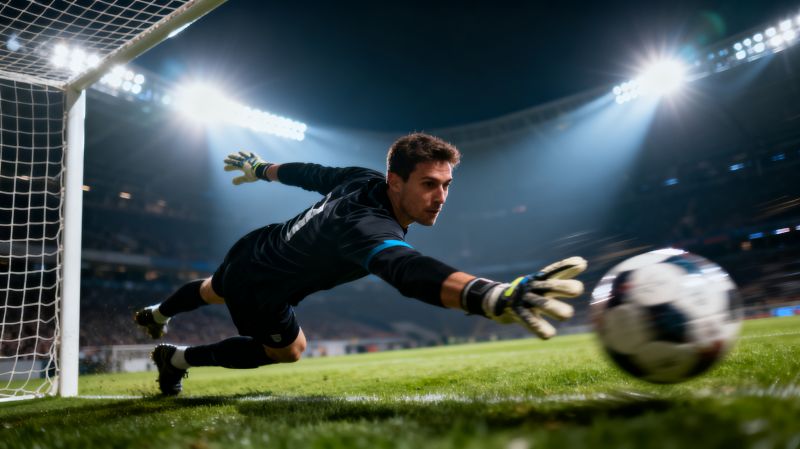
Critics will point to his later years, the errors, the decline. Fair enough. But judging Casillas by his final seasons is like judging a novelist by their last unfinished manuscript. The peak—roughly 2007 to 2012—was a masterclass in shot-stopping. Consider the 2010 World Cup final. Arjen Robben bore down, one-on-one。and Casillas didn't commit. He spread himself, stayed big, and deflected with his trailing leg. That save wasn't about reflex alone;it was about patience. Casillas saves in that moment embodied a philosophy: let the striker make the first move, then counter it. Simple in theory, terrifying in execution.
What separates great keepers from legends is consistency in chaos. Casillas thrived when the backline broke down—and at Real Madrid, it broke down a lot. He faced more one-on-ones than most elite keepers because his teams played high, aggressive football. That exposure inflated his save numbers。sure, but it also forged a mentality. He never looked rattled. Even after a mistake, the next shot got the same intensity. I've seen him concede a soft goal and then produce a world-class stop ninety seconds later. That psychological reset is underrated. Casillas saves weren't just physical feats;they were acts of will.Legacy is a tricky thing. Casillas won everything—World Cup, European Championships, Champions Leagues, league titles. But the numbers that stick with me are the save percentages in knockout matches。the penalty stops in shootouts, the way he turned the 2008 Euro quarterfinal against Italy into a personal showcase. He wasn't the tallest or the most imposing. He didn't command his box like a colossus. What he had was a lightning-quick nervous system and a gambler's intuition. Casillas saves redefined what a goalkeeper could be: less a last line of defense, more a first line of attack. And that, more than any trophy, is why we still talk about him.